
Simplicity Mower Manual: A Comprehensive Guide
Simplicity’s legacy began in 1937, evolving through ownership by Allis-Chalmers and Briggs & Stratton, offering robust lawn and garden solutions for decades.
Understanding Your Simplicity Mower
Simplicity mowers represent a commitment to quality and durability in lawn care. To maximize your mowing experience and ensure proper maintenance, familiarizing yourself with your specific model is crucial. Simplicity has a rich history, initially producing equipment in 1937 and later partnering with, and being owned by, Allis-Chalmers and Briggs & Stratton.
Understanding the nuances of your mower – from its engine specifications to its unique features – allows for efficient troubleshooting and accurate parts ordering. Knowing where to locate the model and serial numbers is the first step in this process. These identifiers are essential for accessing the correct documentation, replacement parts, and support resources. Proper identification unlocks a world of information tailored to your Simplicity machine.
Identifying Your Mower Model
Simplicity lawn tractors and zero-turn mowers each possess a unique model number, vital for accurate service and parts procurement. This number, along with the serial number, acts as your mower’s fingerprint, distinguishing it from all others. Typically, Simplicity equipment features a single model locator tag, streamlining the identification process.
Locating this tag is the first step towards understanding your mower’s specific characteristics. The model number unlocks access to dedicated manuals, parts diagrams, and troubleshooting guides. Knowing your mower’s model also helps determine compatible accessories and ensures you’re using the correct fluids and filters. Accurate identification prevents costly errors and maximizes the lifespan of your Simplicity equipment.
Locating Model and Serial Numbers
Pinpointing your Simplicity mower’s model and serial numbers is crucial for maintenance, repairs, and ordering parts. These identifiers are usually found on a tag affixed to the mower’s frame. While locations can vary slightly, common spots include under the operator’s seat, near the steering column, or on the mower deck itself.
The tag resembles a barcode label and contains both the model number and the serial number. The model number defines the mower’s specific configuration, while the serial number indicates its manufacturing date and sequence. Having both numbers readily available simplifies interactions with dealers, online parts retailers like PartsTree, and customer support, ensuring you receive the correct components for your specific Simplicity mower.
Where to Find the Model Locator Tag
Typically, Simplicity mowers feature a single model locator tag. This tag, similar in appearance to a barcode label, holds vital information for identification. A primary location to begin your search is underneath the operator’s seat. Carefully inspect the frame in this area. Another common spot is near the shifter, particularly on gear-driven models – look for the tag potentially positioned under the shifter assembly.
If these locations yield no results, broaden your search to the mower deck itself. The tag might be affixed to the deck’s underside or along its perimeter. Remember, most Simplicity equipment only has one such tag. Once located, carefully record both the model number and serial number for future reference when ordering parts or seeking service.
Decoding Serial Numbers for Accurate Parts Identification
While the model number pinpoints the general mower configuration, the serial number offers a more granular level of detail. This is crucial for ensuring you order the exact replacement parts needed. The serial number often reveals the manufacturing date and specific revisions made to the mower throughout its production run.
Simplicity utilizes serial numbers to track component changes and improvements. Therefore, a part compatible with one serial number range might not fit another. When ordering through retailers like PartsTree, inputting the complete serial number guarantees accurate parts matching. Don’t rely solely on the model number; the serial number is your key to avoiding frustrating compatibility issues and ensuring a successful repair.
Engine Specifications and Model Numbers
Understanding your Simplicity mower’s engine specifications and model number is paramount for sourcing the correct replacement parts. The engine model number isn’t the same as the mower’s overall model number; it specifically identifies the power source. This number dictates which air filters, oil filters, spark plugs, and carburetor components are compatible.
Locating this engine information is vital. Typically, it’s stamped directly onto the engine block, often above the muffler or near the spark plug. Accurate identification prevents ordering incorrect parts, saving time and money. When searching for engine parts on platforms like PartsTree, utilize this engine model number for precise results, ensuring a proper fit and optimal performance.
Importance of Engine Model Number for Parts
The engine model number is absolutely critical when ordering replacement parts for your Simplicity mower. It’s the key to ensuring compatibility, as different engine models utilize unique components, even within the same Simplicity mower series. Using the mower’s model number alone isn’t sufficient for engine-specific parts like filters, spark plugs, or carburetor kits.
Incorrect parts can lead to poor performance, engine damage, or even safety hazards. Always double-check the engine model number before placing an order. Online parts retailers, such as PartsTree, rely on this number to accurately identify the correct components for your specific engine. Prioritizing this detail saves you the hassle of returns and ensures your Simplicity mower runs smoothly.
Locating Engine Numbers on Your Simplicity Mower
Finding your Simplicity mower’s engine numbers is crucial for parts identification. Typically, these numbers – including the model, specification (spec), serial, type, and code – are stamped directly onto the engine itself. A common location is above the muffler, easily accessible for inspection.
Another frequent spot is near the spark plug. Carefully examine the engine block in these areas; the numbers are often stamped in a small font. You may need a flashlight and a good eye to locate them. Once found, accurately record all numbers, as they are essential when ordering replacement parts or seeking technical support. Remember to differentiate between the mower’s model number and the engine’s model number!
Common Simplicity Mower Parts
Maintaining your Simplicity mower requires occasional part replacements. Mower blades are vital, with various types available depending on your mowing needs; regular sharpening or replacement ensures a clean cut. Drive belts are also prone to wear and tear, impacting the mower’s self-propelled function – identifying the correct belt is key.
Filters – air, oil, and fuel – are essential for engine health. Regularly check and replace these to prevent contaminants from damaging the engine. Spark plugs, tune-up kits, and carburetor parts are also frequently needed for optimal engine performance. Messicks offers a comprehensive inventory of these common Simplicity parts, including blades, belts, and filters, for various models.

Mower Blades: Types and Replacement
Simplicity mower blades are crucial for a clean and healthy lawn. Different blade types exist, including standard lift, mulching, and high-lift blades, each designed for specific cutting needs. Standard lift blades are versatile for general mowing, while mulching blades finely chop grass clippings for natural fertilization.
High-lift blades create stronger suction for bagging. Regular inspection is vital; look for bends, cracks, or excessive wear. Dull blades tear grass instead of cutting it, causing stress to the lawn. Replacement should occur when damage is detected or after significant use. Always disconnect the spark plug before blade removal and ensure proper torque when reinstalling for safety and optimal performance.
Belts: Identifying and Replacing Drive Belts
Simplicity mowers utilize various belts for blade engagement and self-propelled functions. Identifying the correct belt is essential for proper operation; refer to your mower’s model number to ensure compatibility. Common belt types include deck belts and drive belts, each with specific dimensions and tensile strength.
Signs of a worn belt include cracking, fraying, or slipping during operation. Replacing a belt typically involves removing the mower deck or accessing the drive system. Always disconnect the spark plug before beginning. Route the new belt correctly, following the original path, and ensure proper tension. Incorrect installation can lead to premature wear or system failure, impacting mowing performance and safety.
Filters: Air, Oil, and Fuel Filter Maintenance
Maintaining clean filters is crucial for optimal Simplicity mower performance and longevity. The air filter prevents debris from entering the engine, while the oil filter removes contaminants from the lubricating oil. A clean fuel filter ensures a consistent fuel supply. Regularly inspect each filter based on your mower’s usage.
Air filters should be checked before each use and cleaned or replaced as needed. Oil filters are typically replaced during annual oil changes. Fuel filters should be replaced periodically to prevent fuel starvation. Refer to your owner’s manual for specific intervals. Using genuine Simplicity filters or approved replacements guarantees proper fit and filtration, safeguarding your engine from damage and ensuring reliable operation.

Simplicity Mower History and Ownership
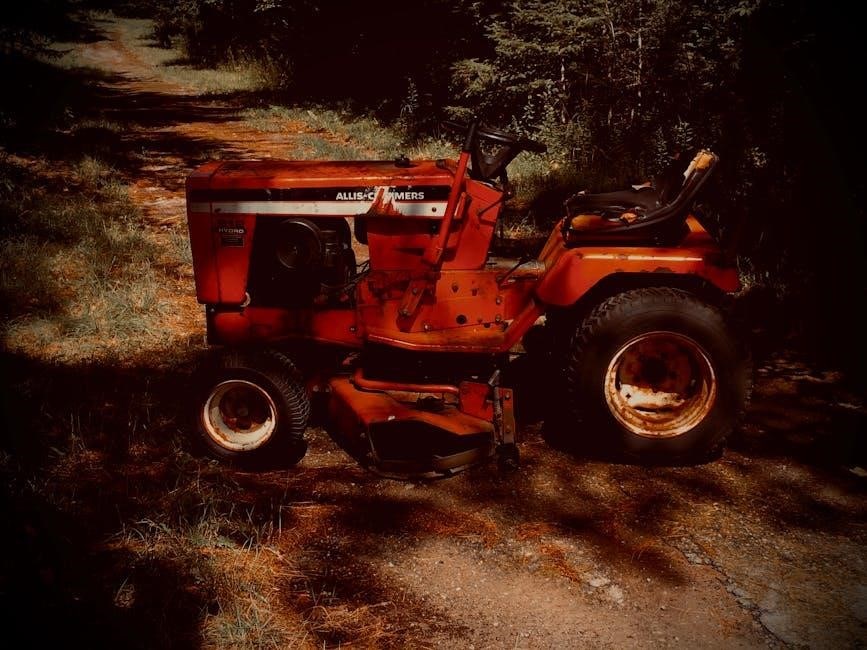
Simplicity Manufacturing began its journey in 1937, quickly establishing a reputation for durable and innovative lawn equipment. A significant chapter unfolded in 1965 when Allis-Chalmers acquired the company, leveraging Simplicity’s expertise in tractor design. This partnership saw Simplicity producing lawn tractors for Allis-Chalmers for nearly two decades.
In 1983, Simplicity transitioned to management ownership, continuing its independent path. However, the story didn’t end there. In 2004, Briggs & Stratton, a powerhouse in small engine manufacturing, purchased Simplicity, integrating its legacy with a broader portfolio. Understanding this ownership history provides context for parts identification and recognizing the evolution of Simplicity mower designs over the years.
Simplicity Manufacturing: A Brief History
Simplicity Manufacturing’s story began in 1937, rooted in a commitment to producing high-quality lawn and garden equipment. The company quickly gained recognition for its innovative designs and durable construction, establishing a strong foothold in the market. Early successes paved the way for expansion and a growing product line, catering to both residential and commercial customers.
Throughout its history, Simplicity prioritized engineering excellence and user-friendly operation. This dedication fostered a loyal customer base and solidified its reputation as a trusted brand. The company’s evolution reflects a continuous pursuit of improvement, adapting to changing market demands and technological advancements, ultimately shaping the landscape of lawn care.
Allis-Chalmers and Briggs & Stratton Ownership
Simplicity’s ownership journey took a significant turn in 1965 when it was acquired by Allis-Chalmers, a prominent manufacturer of agricultural and construction equipment. This partnership allowed Simplicity to leverage Allis-Chalmers’ extensive resources and distribution network, expanding its reach and market presence. Simplicity notably produced lawn tractors for Allis-Chalmers during this period.
However, in 1983, Simplicity was sold by Allis-Chalmers to its management team, marking a period of independence. This autonomy lasted until 2004, when Briggs & Stratton, a leading small engine manufacturer, purchased Simplicity. This acquisition integrated Simplicity’s expertise in outdoor power equipment with Briggs & Stratton’s engine technology, creating a synergistic relationship that continues to influence product development today.
Maintenance and Repair Resources

Maintaining your Simplicity mower is crucial for optimal performance and longevity. Messicks offers a comprehensive online catalog of Original Equipment Manufacturer (OEM) parts and accessories, ensuring compatibility and quality. You can readily find essential components like mower blades, belts, filters, and spark plugs for various Simplicity models, including lawn tractors, zero-turn mowers, snow blowers, and garden tillers.
For specialized engine parts, PartsTree is an invaluable resource. Because Simplicity utilizes engines from various manufacturers, searching by your specific engine model number on PartsTree is often necessary. This allows you to locate air filters, oil filters, fuel filters, spark plugs, tune-up kits, and carburetor parts efficiently, guaranteeing the correct fit and function for your Simplicity equipment.
OEM Parts and Accessories Online
Messicks stands as a premier online destination for authentic Simplicity parts and accessories, dedicated to keeping your equipment running smoothly. They provide a vast inventory of components designed specifically for Simplicity lawn tractors, zero-turn mowers, snow blowers, and garden tillers. Sourcing OEM parts guarantees a precise fit and maintains the original performance standards of your machine.
Commonly sought-after items include durable mower blades for a clean cut, reliable belts to ensure efficient power transfer, and essential filters – air, oil, and fuel – to protect your engine. Furthermore, Messicks stocks spark plugs and other maintenance necessities, simplifying your upkeep routine and extending the life of your Simplicity equipment. Prioritize quality with genuine Simplicity parts from Messicks.
PartsTree for Simplicity Engine Parts

When sourcing engine parts for your Simplicity mower – such as air filters, oil filters, fuel filters, spark plugs, tune-up kits, or carburetor components – PartsTree offers a specialized approach. Due to the variety of engines used on Simplicity equipment, it’s often necessary to search for parts separately based on your specific engine model.
Locating the engine model and specification (spec) numbers is crucial. These are frequently stamped on the engine, often above the muffler or near the spark plug. PartsTree facilitates a targeted search using these numbers, ensuring you find the correct replacement parts for your Simplicity’s engine. Accurate identification prevents compatibility issues and guarantees optimal performance, keeping your mower running reliably.
Troubleshooting Common Issues
One frequently encountered problem with Simplicity mowers is difficulty with manual mower deck engagement. This often stems from a worn or improperly adjusted linkage, or a faulty engagement cable. Inspecting these components for wear, damage, or correct tension is a good starting point.
Determining the year of your Simplicity mower can also be challenging, but features often provide clues. For example, a mower with a shifter on the left-hand side and manual deck engagement, like the 1693911 Regent 15 Gear, likely dates from 2002-2004. Always check for a model locator tag, often found under the shifter, containing a barcode with the precise model information for accurate identification and parts sourcing.
Manual Mower Deck Engagement Problems
Difficulty engaging the mower deck manually is a common issue with Simplicity mowers. Often, this arises from a worn or misadjusted linkage system connecting the engagement lever to the deck. Carefully inspect the linkage for any signs of damage, such as bent rods or broken connections.
Another potential cause is a stretched or frayed engagement cable. Check the cable’s tension and ensure it’s properly routed. Lubricating the cable and linkage points can also improve operation. If the cable is damaged, replacement is necessary. Remember to disconnect the spark plug before performing any maintenance. A thorough inspection and adjustment of these components usually resolves manual engagement problems.
Identifying Mower Year Based on Features
Determining a Simplicity mower’s year can be tricky without the model or serial number, but certain features offer clues. For example, a shifter on the left-hand side, coupled with manual mower deck engagement, suggests a model potentially manufactured between 2002 and 2004, like the Regent 15 Gear.
However, this isn’t definitive. Examining the overall design, engine type, and specific components can narrow down the timeframe. Consulting online forums dedicated to Simplicity mowers and comparing your mower’s features with images and discussions can be incredibly helpful. Locating the original model tag, even if faded, remains the most accurate method for year identification.